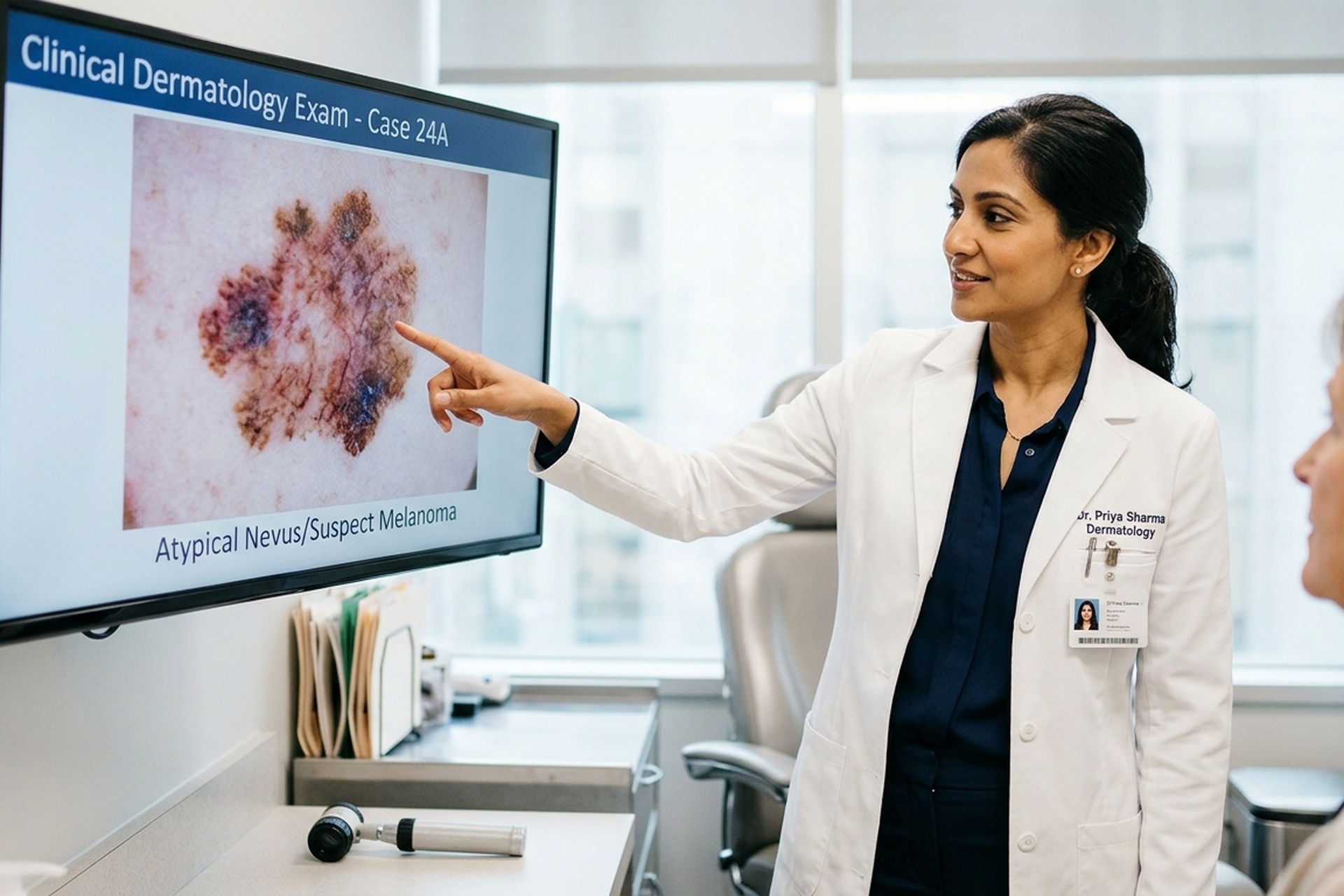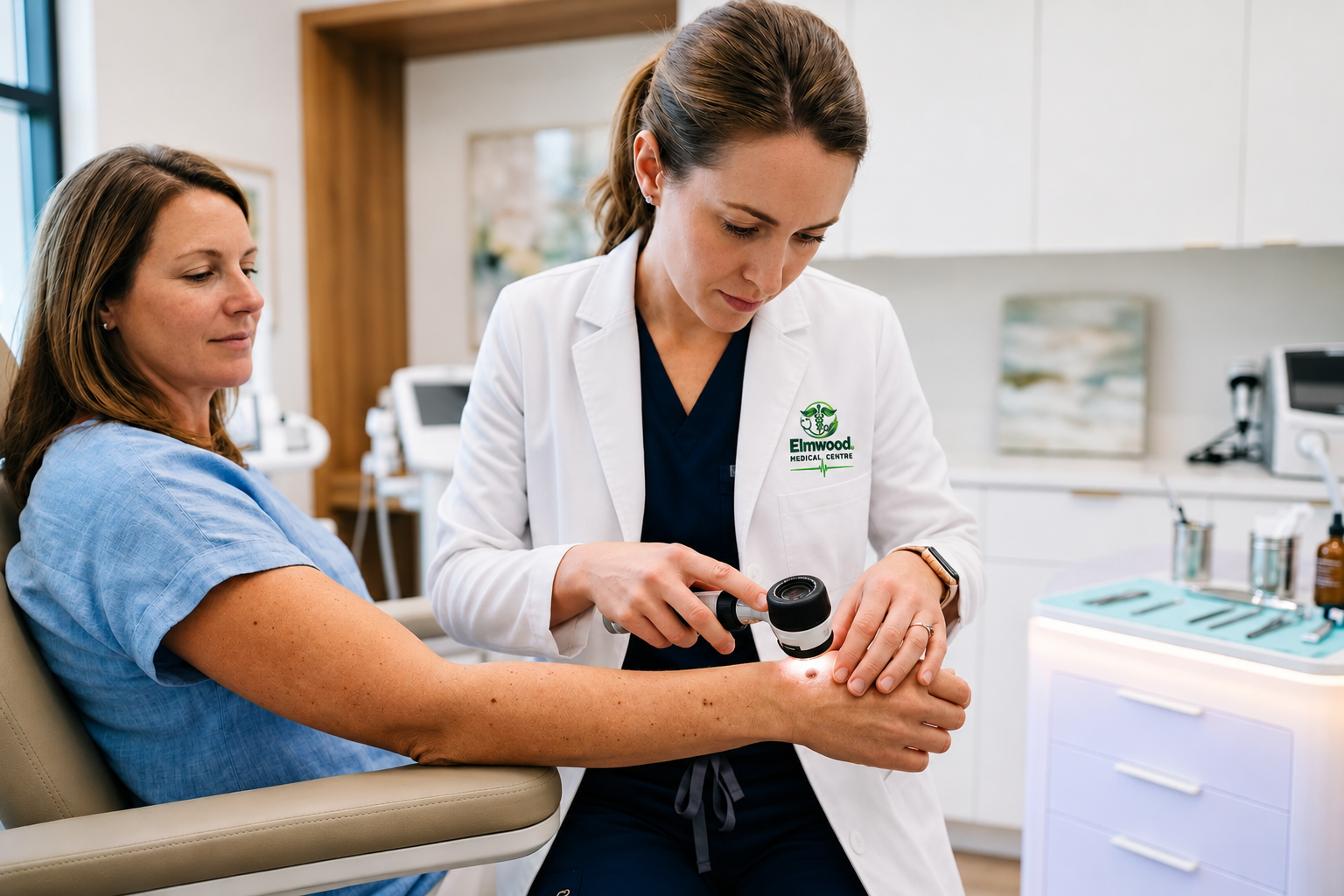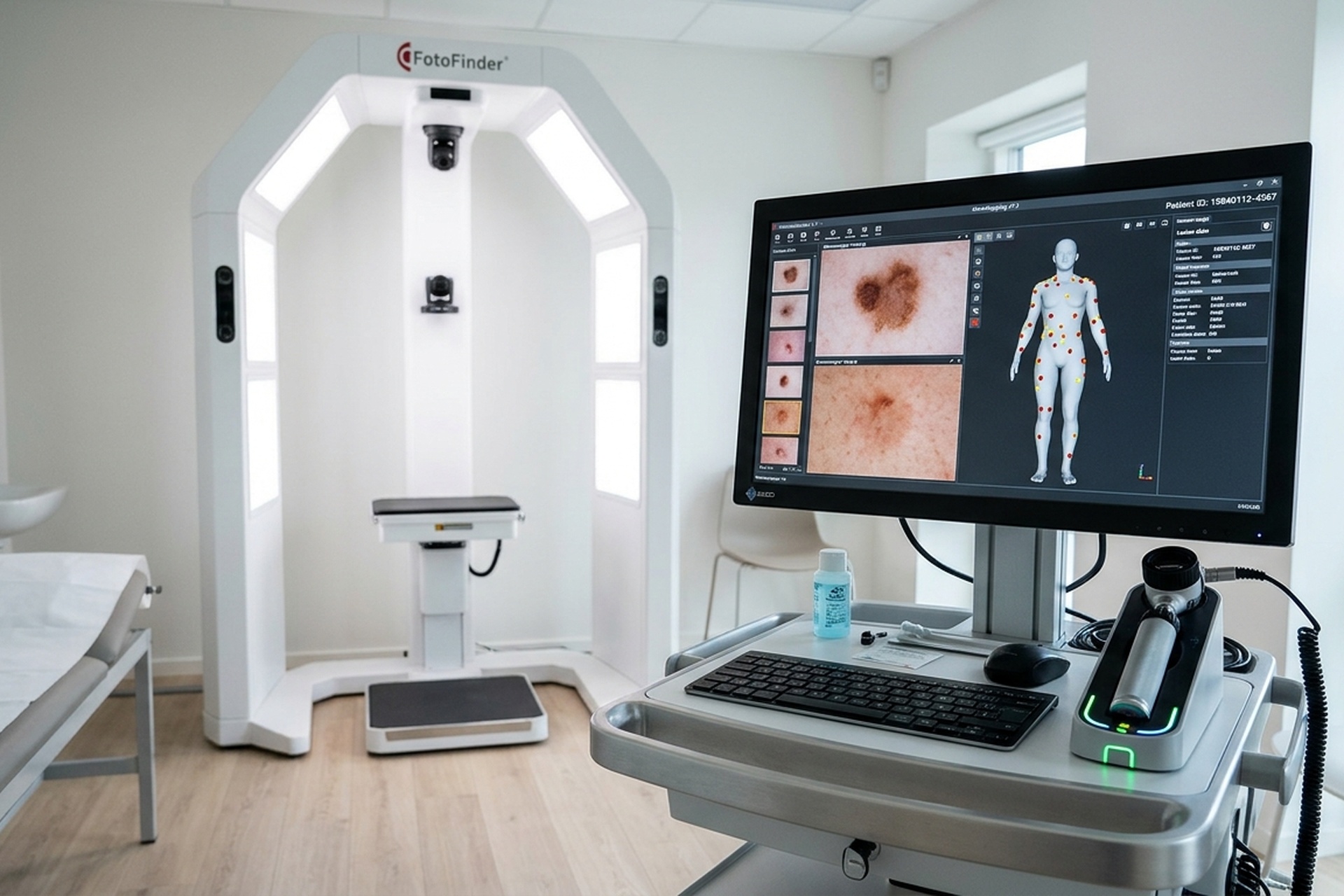
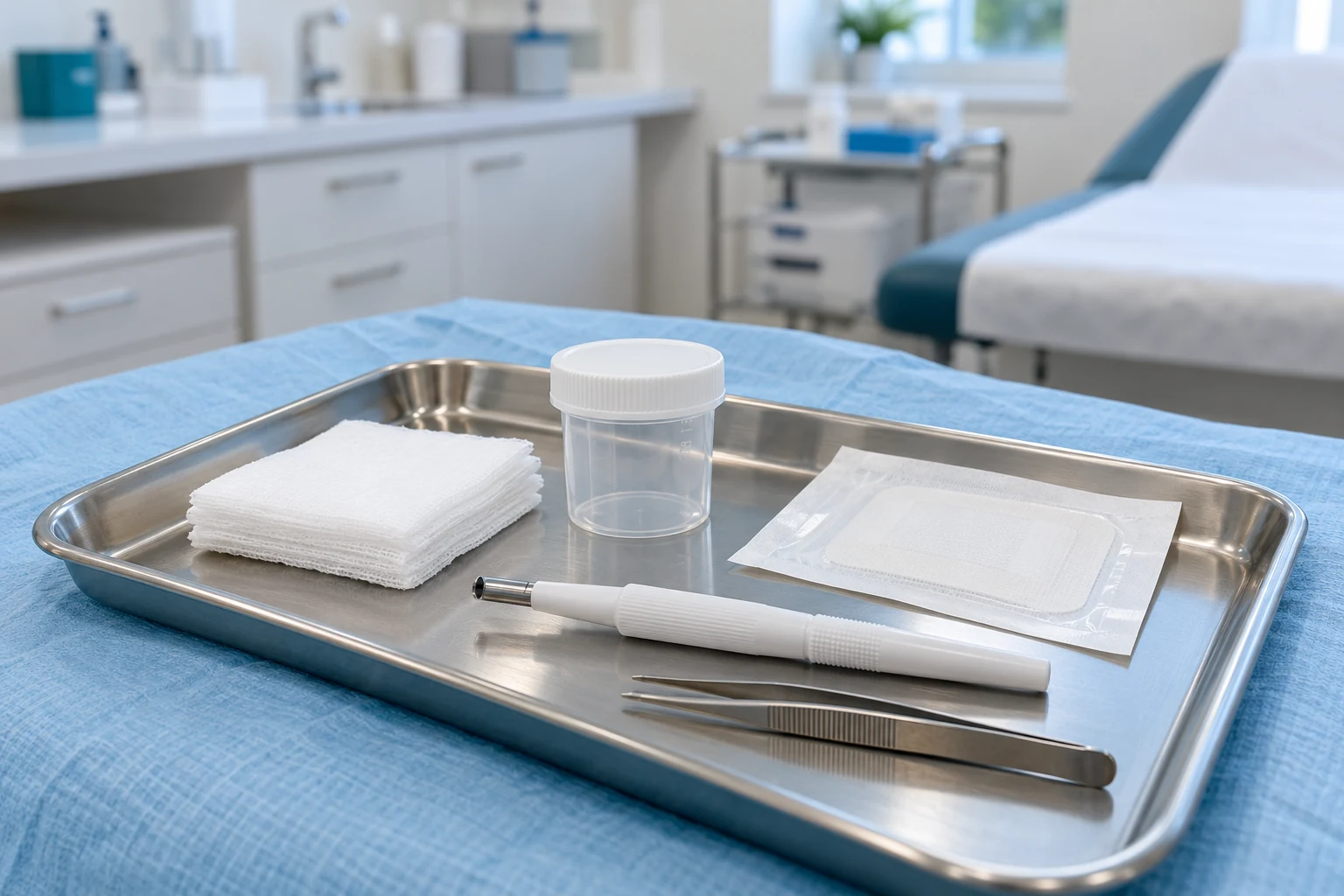
A skin biopsy removes part or all of a spot so a pathologist can examine the tissue. Your doctor may recommend one when a closer look is needed to confirm a diagnosis and plan the next step.
Why a biopsy may be needed
Not every unusual spot is skin cancer, and appearance alone does not always give a clear answer. Examining a tissue sample can help distinguish between different conditions and guide treatment.
The method depends on the spot and what your doctor needs to find out. A shave or punch biopsy takes a sample; an excision biopsy removes the whole spot. When melanoma is suspected, removing the whole spot is generally the preferred biopsy approach. Your doctor will explain which method is appropriate for your spot.
What happens during the procedure
A local anaesthetic is usually used to numb the area. The doctor removes the required tissue and may use stitches to close the site. The sample is sent to a pathology laboratory.
Tell your doctor about medicines, allergies and any history of healing problems beforehand. Do not stop prescribed medicines unless the clinician caring for you advises it.
Aftercare and your result
Follow the written instructions provided for your wound, dressing, washing and activity. Aftercare differs with the procedure and location. If stitches are used, confirm when and where they should be removed.
Contact your clinic if you develop increasing pain, spreading redness, pus or fever. Ask when to expect the result and follow up if you have not received it. The result may show that no further treatment is needed, or that another procedure or review is appropriate.
Further reading & sources
This guide provides general information. Your doctor can advise on your symptoms, risk and individual care.