

New or Changing Mole
& Urgent Spot Check

Noticed something different? Talk through the change and understand what should happen next.

New or changing mole

A changing spot.
A clear next step.

A new or changing mole deserves a closer look. Changes in size, shape, colour or behaviour can have several causes; an examination helps decide what needs attention.

Your visit, explained

Your spot check,
step by step.

Your doctor brings together the history of the spot and its appearance. You can ask questions at every stage.

  1. 01

    Describe what has changed

    Point out the spot and explain when you noticed it. Previous photographs, symptoms and your skin cancer history can help the discussion.

  2. 02

    Examine the area

    The doctor examines the lesion and may use a dermatoscope. They will explain whether a wider skin examination is appropriate.

  3. 03

    Understand the findings

    Ask what the appearance suggests and what remains uncertain. A clinical examination cannot always provide a definite diagnosis.

  4. 04

    Choose the next step

    Depending on the findings, the plan may be reassurance, a timed review, a biopsy or referral. Confirm how to follow up.

Before you arrive

A little preparation.
A better conversation.

A few notes can make it easier to explain the change, especially if the spot looks different from day to day.

Talk to our team
  • Record the timeline

    Note when the spot appeared and any growth, itching, crusting or bleeding.

  • Bring earlier photographs

    An existing photo may help show a change. Do not delay an appointment to collect more pictures.

  • Share relevant history

    Bring details of previous skin cancers, medicines, allergies and any immune-system conditions.

  • Explain your concern when booking

    Tell the team what has changed so they can advise on the appropriate appointment.

Your next steps

Keep the review plan clear.

If monitoring is recommended, confirm when to return and what changes should prompt an earlier visit. A photograph is a record for your clinician, not a substitute for medical assessment.

Read the mole-checking guide

Good questions, clear answers

A few things
you might be asking.

For advice about your own symptoms or appointment, speak with our team.

Does a changing mole always mean cancer?

No. Benign skin conditions can change too. An assessment is useful because harmless and concerning lesions may look alike, and a changing spot cannot be diagnosed reliably from a description alone.

What are the ABCDE warning signs?

They describe asymmetry, an irregular border, uneven colour, increasing diameter and evolution over time. Melanoma can be smaller than 6 mm, and some lesions do not follow this pattern.

What if a spot is raised and growing quickly?

Tell the clinic about rapid growth, firmness, bleeding or a non-healing area when you arrange a review. Some concerning lesions are pink or even in colour rather than dark and irregular.

Can I book for one concerning spot?

Tell the team that you want a particular spot assessed. Your doctor may recommend checking other areas as well, depending on the findings and your risk. Confirm the booking type with the clinic.

Will the spot be removed at the first visit?

Not necessarily. Your doctor will discuss the appropriate next step and whether a procedure needs a separate appointment. Ask about consent, costs and the results process before proceeding.

Can an app or a photo tell me it is harmless?

A photo may help document a change, but it cannot reliably rule out skin cancer. A clinician can examine the spot directly and discuss whether further testing is needed.

Skin changes worth checking

Knowing what is usual for your skin can make a new or changing spot easier to notice. Skin cancers are often noticed because of appearance rather than pain.

Look beyond familiar moles

Pay attention to a new lump, an unusual patch, a sore that does not heal or a spot that repeatedly bleeds or crusts. Not every concerning lesion is dark or uneven.

Check areas you cannot easily see

Use good light and mirrors, or ask someone to help with your scalp and back. Remember areas that receive little sun, including your soles, between fingers and toes, and around nails.

An original summary based on Cancer Council Australia patient information. General information; your clinician can advise on your individual care.


The ABCDE guide to changing moles

The ABCDE guide describes features that can help you recognise a mole or pigmented spot that needs medical attention. It is a reminder, not a diagnosis.

A, B and C

Asymmetry means the two halves look different. Border refers to an irregular or poorly defined edge. Colour means uneven shades or several colours within a spot.

D and E

Diameter draws attention to size and growth; melanoma can also be smaller than 6 mm. Evolving means a change in size, shape, colour or appearance compared with your other spots.

An original summary based on American Academy of Dermatology patient information. General information; your clinician can advise on your individual care.

Dermoscopy, monitoring and biopsy

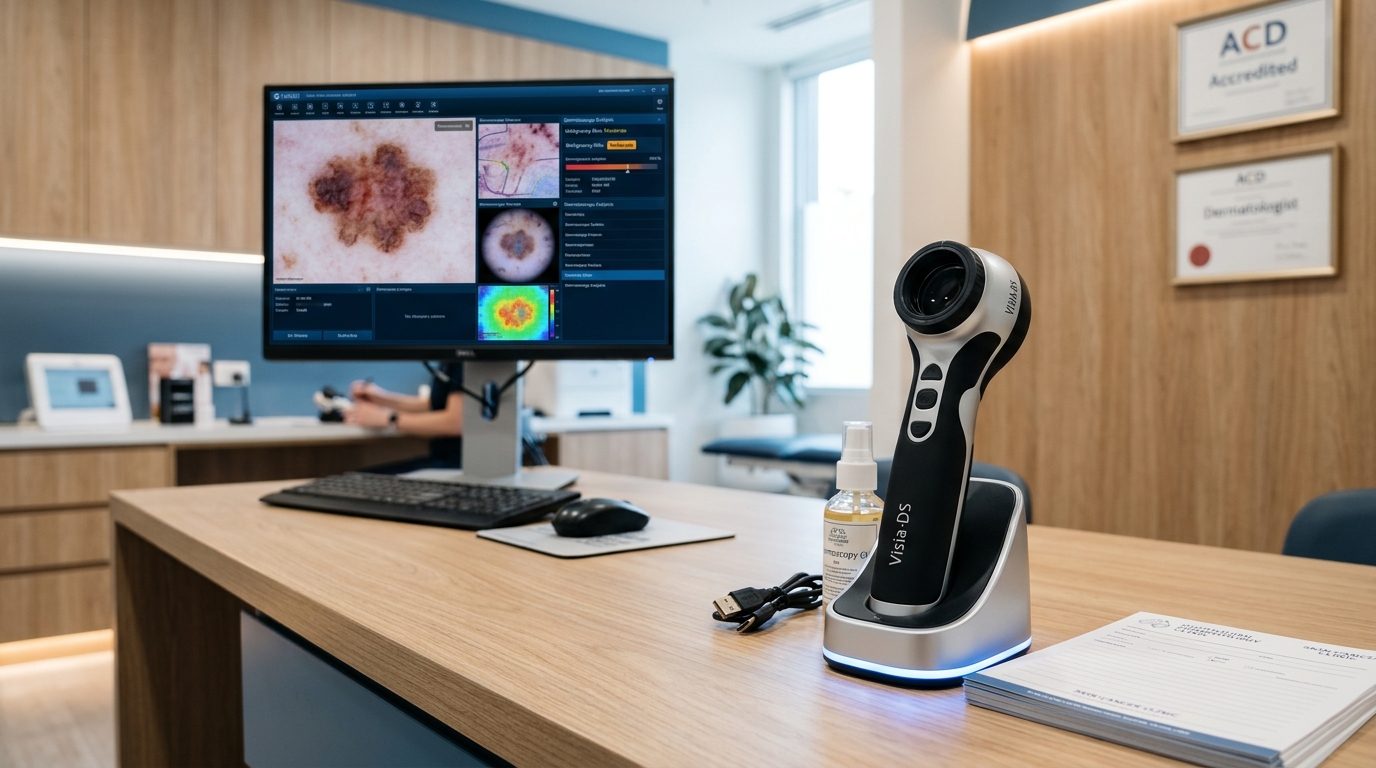
A dermatoscope is a handheld magnifying instrument used to examine skin features more closely. It helps your doctor decide whether a spot needs further assessment.

A closer clinical examination

Your doctor considers the appearance of the spot alongside your history and any changes you have noticed. Ask what the examination shows and whether the next step is reassurance, a review or further assessment.

When a sample is recommended

A suspicious lesion may need a biopsy so a pathologist can examine the tissue. When melanoma is suspected, removal of the whole spot is generally preferred when appropriate.

An original summary based on Cancer Council Australia patient information. General information; your clinician can advise on your individual care.

A little more clarity

Patient guide

More Services

    Elmwood Skin · Albury–Wodonga

    Discuss a changing spot.

    Explain what you have noticed and arrange the right appointment with our team.

    7 McFarland Road, Wodonga VIC