Knowing what is normal for your skin makes it easier to notice a new or changing spot. The ABCDE guide is a useful starting point for looking at moles, but it cannot diagnose melanoma or rule it out.
What does ABCDE mean?
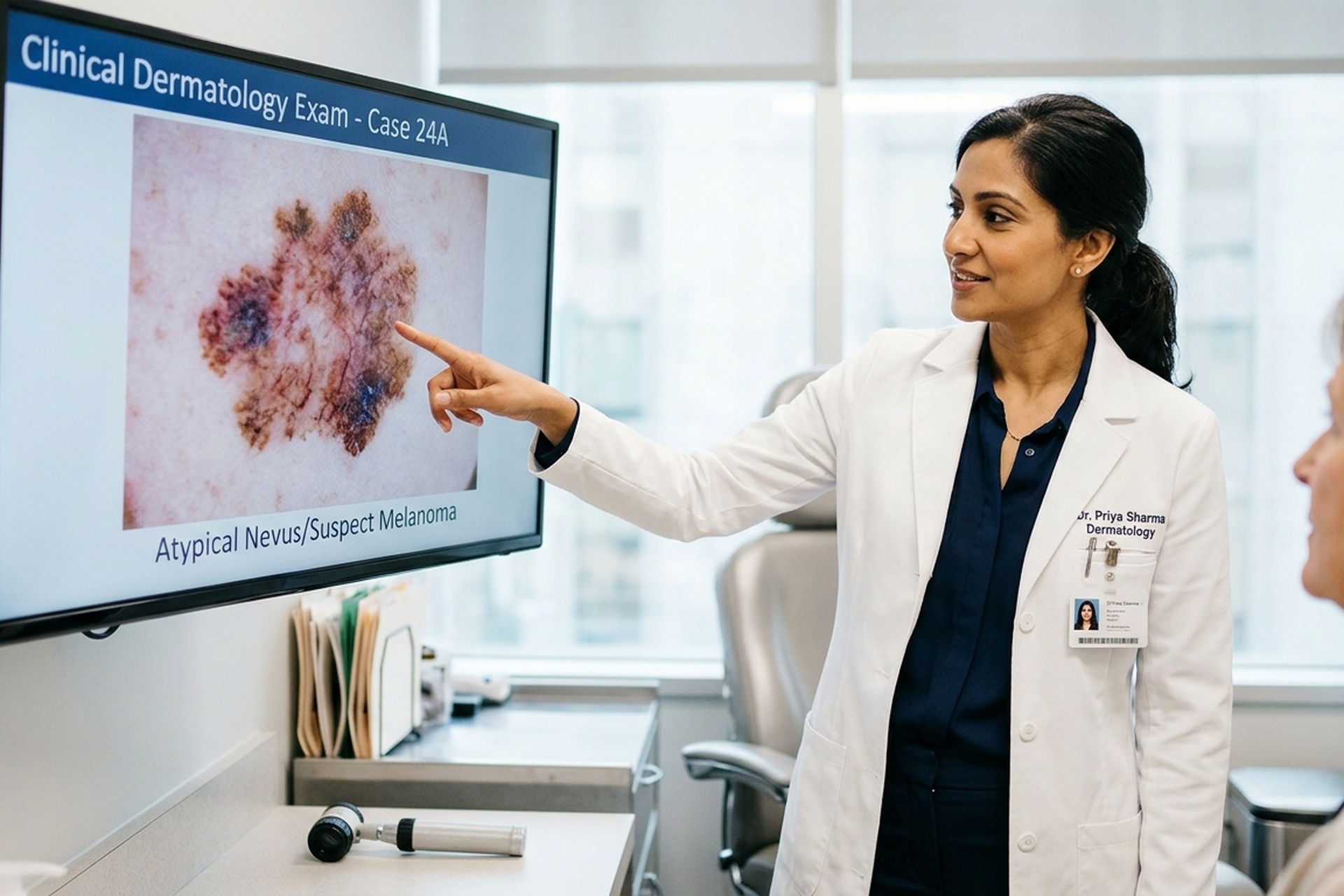
- A Asymmetry
- One half of the spot looks different from the other.
- B Border
- The edge is irregular, uneven or poorly defined.
- C Colour
- There are several colours, or the colour is uneven.
- D Diameter
- Watch for growth. Melanomas may be larger than 6 mm, but smaller spots can also be melanoma.
- E Evolving
- The spot changes in size, shape, colour or behaviour, including itching or bleeding.
How to check your skin
Use good light and a mirror to look over your skin, including areas that rarely see the sun. Check your scalp, back, hands, nails, legs and the soles of your feet. A partner can help with places you cannot see easily.
Pay attention to a spot that stands out from your usual pattern. If you take a photograph to remember a change, use it as a record for your doctor rather than a way to diagnose the spot yourself.
When to see a doctor
Arrange an appointment for a new or changing spot, a sore that does not heal, or a spot that bleeds. Some melanomas do not look like the familiar dark, irregular mole. A raised, firm or quickly growing spot also needs attention.
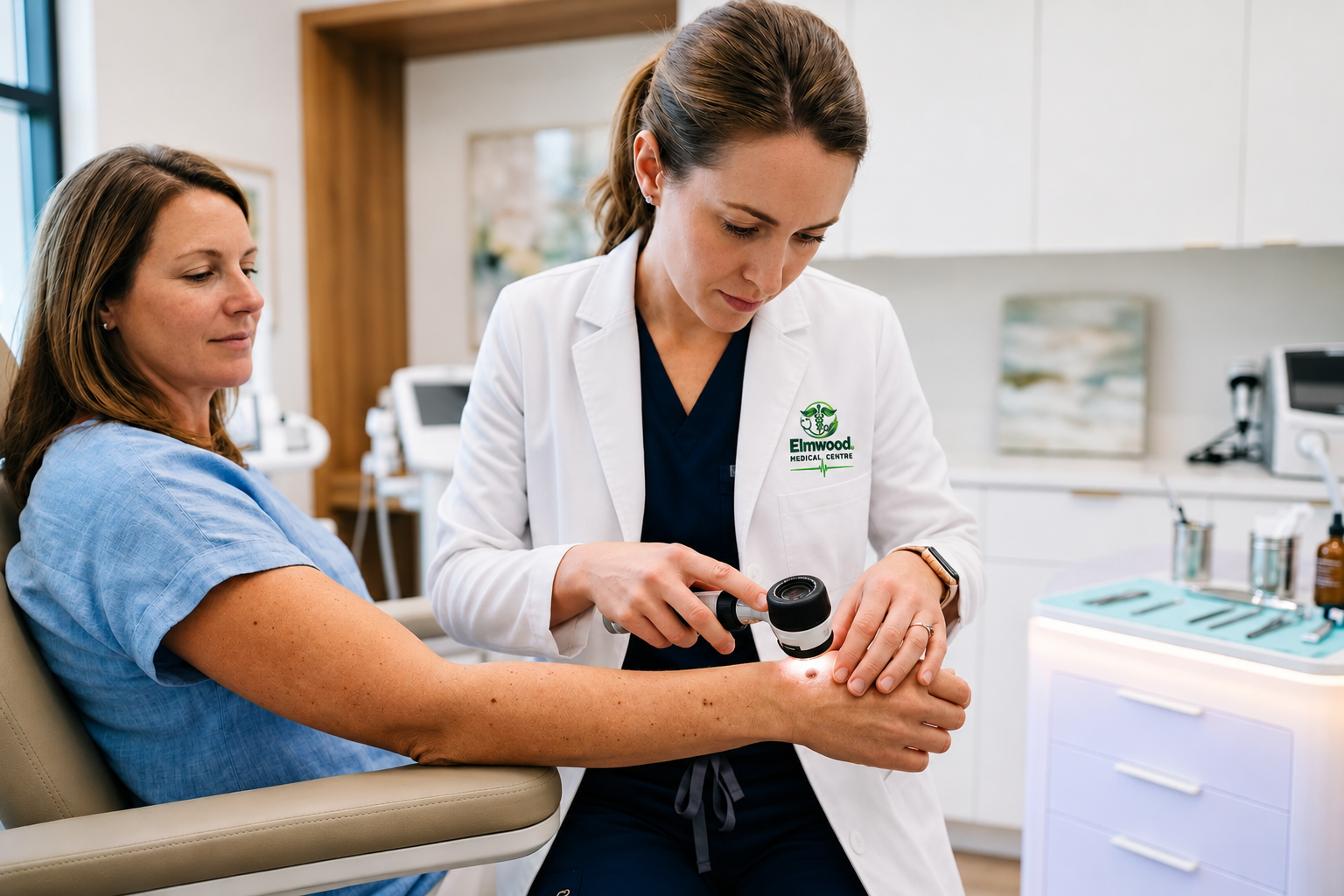
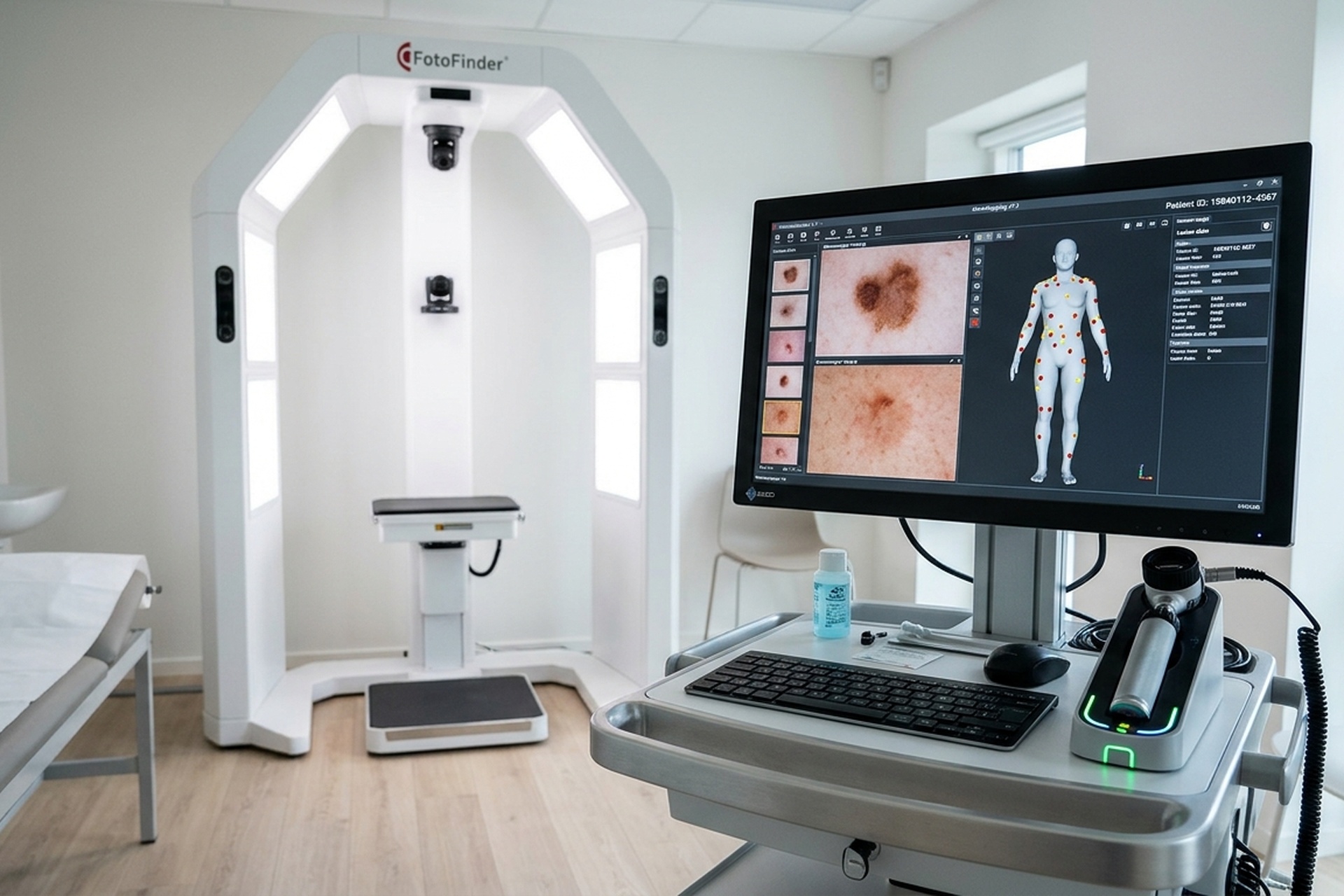
Do not wait for a spot to become painful or to develop every warning sign. Your doctor can examine it with a dermatoscope and explain whether further assessment is needed.
Further reading & sources
This guide provides general information. Your doctor can advise on your symptoms, risk and individual care.