
Follow-Up
& Skin Cancer Surveillance

Keep track of your skin, understand your results and know when to seek a review between visits.

Follow-up and surveillance

Ongoing care.
A plan that stays personal.

Follow-up helps review treated areas, discuss results and assess new or changing spots. After a skin cancer diagnosis, ongoing care is planned around your history, the cancer and your individual risk.

Your visit, explained

Your follow-up,
with a clear purpose.

Your review is also a chance to raise questions about healing, future checks and how you are feeling. Bring any concerns rather than waiting for them to become difficult to manage.

  1. 01

    Review what has happened

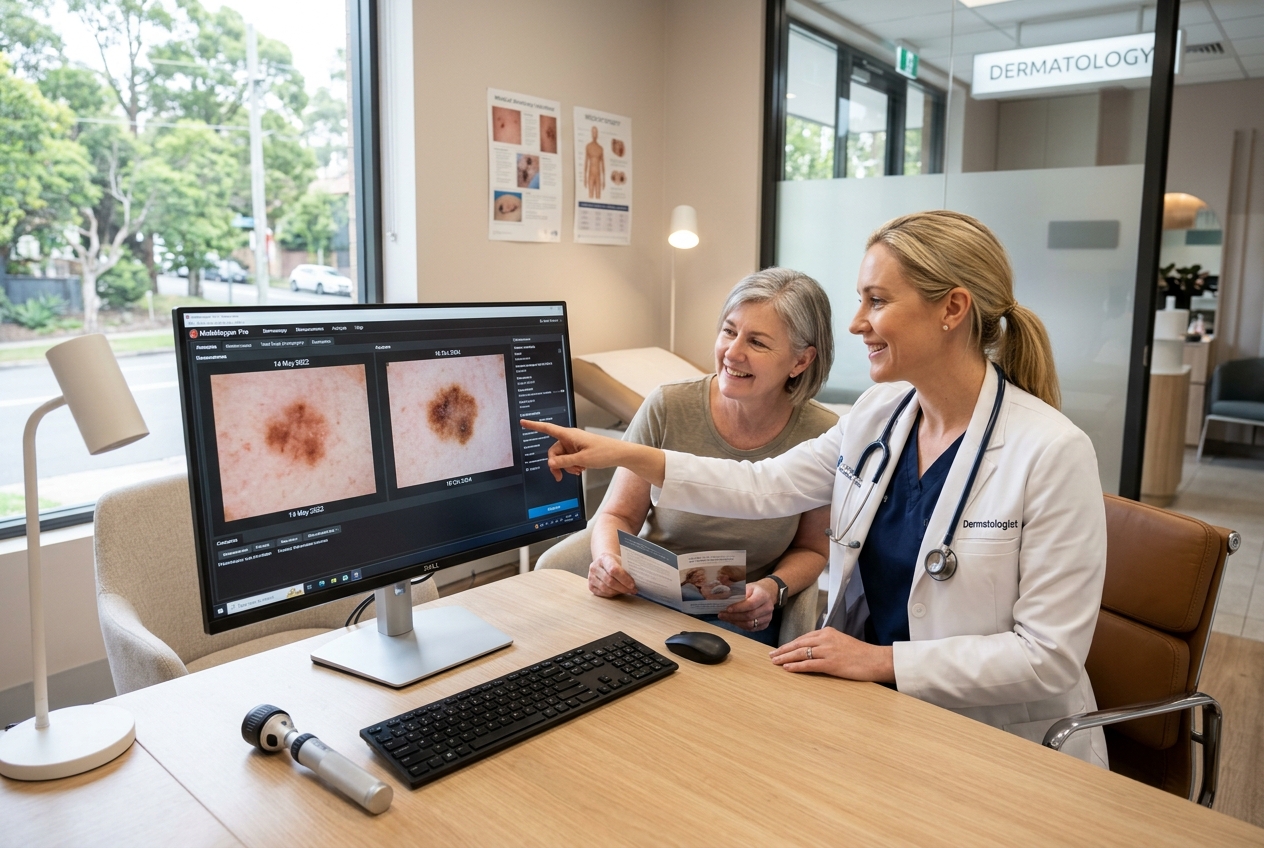
    Discuss treatment since your last visit, pathology results, healing and any symptoms or worries you have noticed.

  2. 02

    Examine the areas of concern

    Your doctor may check treatment sites and other skin areas. The extent of the examination follows your care plan and clinical needs.

  3. 03

    Review your care records

    Previous pathology results, treatment summaries and specialist letters help your clinician understand the care already provided and plan your next steps.

  4. 04

    Agree on the next review

    Confirm the timing, who will arrange it, how results are shared and who to contact if you notice a concern sooner.

Before you arrive

A little preparation.
A better conversation.

Keep your care information together so different clinicians can understand what has been done and what needs to happen next.

Talk to our team
  • Bring your treatment summary

    Include relevant pathology, procedure details and letters from other members of your care team.

  • List any new concerns

    Note changes to spots, treatment sites, symptoms or healing since the previous appointment.

  • Bring relevant reports

    Have earlier pathology results and treatment letters available, or ask how records from another clinic can be shared.

  • Check who is coordinating care

    Confirm whether your GP, this clinic or a specialist is arranging your next review and results.

Your next steps

A recall plan is a guide, not a reason to wait.

Keep the agreed appointments and remain familiar with your skin between visits. Continue combined sun protection and ask about your personal risk. The timing and type of follow-up can change as your circumstances change.

Read the ongoing-care guide

Good questions, clear answers

A few things
you might be asking.

For advice about your own symptoms or appointment, speak with our team.

How often will I need follow-up?

There is no single interval for everyone. Your diagnosis, treatment, risk and time since treatment influence the plan. Ask your clinician for your schedule and what should prompt an earlier appointment.

What happens at a follow-up appointment?

Your clinician reviews your treatment history, pathology results, healing and any new concerns. The examination and next review are planned around your diagnosis and individual needs.

Will I need another biopsy?

Your doctor will explain whether a new or changing area needs further assessment. A biopsy may be recommended when tissue examination is needed to confirm a diagnosis.

What if I notice a change before my next visit?

Contact your doctor and explain what has changed. You do not need to wait for a reminder or your booked review if a new symptom or spot is concerning you.

Can I follow up after treatment at another clinic?

Ask the team about an appropriate appointment and transferring relevant records. Previous pathology and treatment details can help your clinician understand the care already provided and what follow-up is needed.

What if I am worried about skin cancer returning?

Bring that concern to your appointment. Your care team can explain the review plan and discuss support. Knowing who to contact between visits can help you manage uncertainty and get advice when needed.

Making follow-up care work for you

Follow-up can review treatment outcomes, check concerns and help manage the effects of cancer care. It is also an opportunity to discuss how you are feeling.

An individual schedule

Your diagnosis, treatment and circumstances influence the timing and type of review. Care may be shared between your GP and specialists. Confirm who is responsible for arranging each part.

Questions worth bringing

Ask how often to attend, which tests are needed, who explains results and who to contact between visits. Raise practical concerns or anxiety as well as physical symptoms.

An original summary based on Cancer Australia patient information. General information; your clinician can advise on your individual care.


Caring for your skin after treatment

After skin cancer treatment, ongoing skin awareness and sun protection remain important. Your clinician can advise on checks suited to your diagnosis and risk.

Stay familiar with your skin

Notice new, changing or non-healing spots, including changes near treated areas. Bring concerns to your doctor rather than relying only on a future reminder.

Protect against further ultraviolet damage

Combine protective clothing, sunscreen, a hat, shade and sunglasses. Ask whether a medicine or health condition makes you more sun-sensitive, and how to manage your own needs after treatment.

An original summary based on Cancer Council Australia patient information. General information; your clinician can advise on your individual care.

Planning checks around your personal risk

Clinical skin checks and self-awareness have different roles. Your history and risk help your doctor decide whether regular examinations or additional monitoring are appropriate.

Discuss your background

Previous skin cancer, unusual moles, family history and immune suppression are among the factors that may influence a review plan. Explain any changes you have noticed as well as your earlier diagnoses.

Between appointments

Stay familiar with your skin, including hard-to-see areas. Existing photographs can document changes, but an app or photograph should not be used to reassure yourself that a concerning spot is harmless.

An original summary based on Cancer Council Australia patient information. General information; your clinician can advise on your individual care.

A little more clarity

Patient guide

More Services

    Elmwood Skin · Albury–Wodonga

    Keep your next steps clear.

    Discuss your recall plan, a new concern or the records needed for your review.

    7 McFarland Road, Wodonga VIC