
Skin Cancer Treatment
& Surgical Excision

Discuss your diagnosis, the recommended treatment and the care needed before and after a procedure.

Skin cancer treatment

Treatment with a plan.
Care beyond removal.

Skin cancer treatment depends on the diagnosis, size, location and other risk features, together with your health. Surgery is a common option, but the right plan is individual and may include specialist care.

Your visit, explained

From assessment
to a clear treatment plan.

A treatment discussion should cover the proposed procedure, alternatives, recovery, pathology and the possibility of further care. Ask for anything unclear to be explained.

  1. 01

    Review the diagnosis

    Discuss the pathology, the site and your medical history. Your clinician assesses whether treatment can be arranged locally or needs specialist input.

  2. 02

    Explain removal and repair

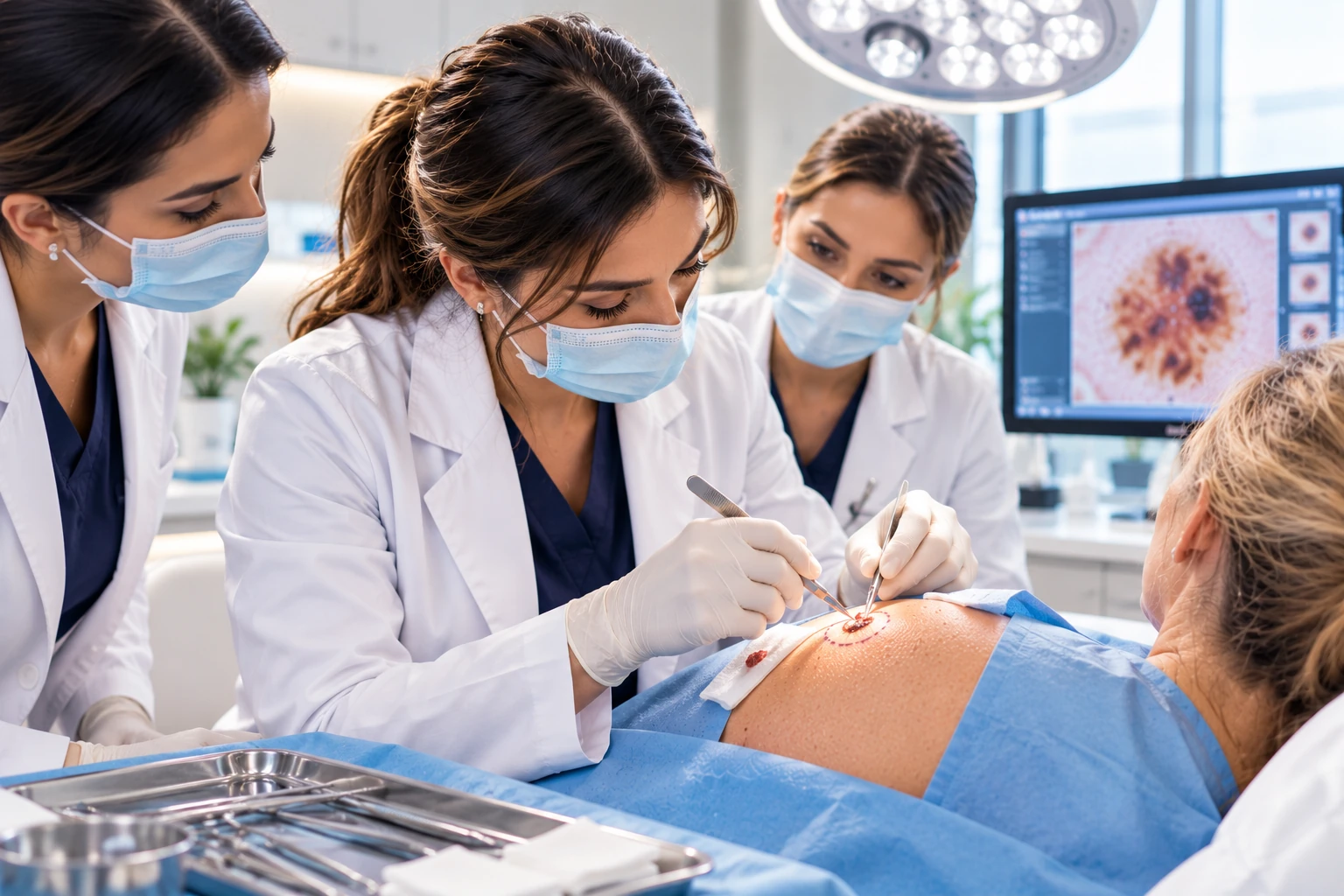
    For an excision, the cancer and a surrounding margin are removed. The closure method depends on the wound; some cases need more complex repair.

  3. 03

    Confirm the procedure details

    Ask about anaesthetic, consent, bleeding and wound risks, practical preparation and costs. The appropriate appointment and setting will be explained.

  4. 04

    Plan results and recovery

    Removed tissue is examined by pathology. Confirm wound care, any stitch removal, how results will be communicated and when your skin should be reviewed.

Before you arrive

A little preparation.
A better conversation.

Plan for both the procedure and the days afterwards. Restrictions vary with the treatment site and the repair being considered.

Talk to our team
  • Bring reports and medicine details

    Have your pathology, medication list and relevant specialist information available.

  • Discuss allergies and previous healing

    Mention dressing reactions, bleeding issues, scarring concerns or previous problems with procedures.

  • Ask about work and activity

    Discuss lifting, exercise, driving and caring responsibilities before choosing a procedure date.

  • Confirm your written plan

    Check the appointment details, dressing instructions, follow-up arrangements and contact number.

Your next steps

Healing, pathology and follow-up all matter.

Follow the instructions for your wound and activity. Report increasing pain, spreading redness, discharge or fever. If pathology shows cancer at a margin, further treatment may be discussed. Confirm your result and ongoing review plan.

Read the follow-up care guide

Good questions, clear answers

A few things
you might be asking.

For advice about your own symptoms or appointment, speak with our team.

Does every skin cancer need surgery?

Surgery is common, but treatment depends on the cancer and its features. Other options may suit selected cases. Your doctor can explain the recommendation, alternatives and any need for specialist assessment.

What does a clear margin mean?

A pathologist examines the edges of the removed tissue for cancer cells. The margin result helps guide whether more treatment is needed. Your clinician should explain it alongside the full diagnosis.

What if the margins are not clear?

Your clinician may recommend more surgery, another treatment or specialist review. The next step depends on the cancer and the overall findings; an involved margin does not automatically mean the same plan for everyone.

Will I need a flap or graft?

Many wounds can be closed with stitches. Larger or more complex wounds may need a skin flap, graft or specialist repair. Ask where the procedure would be performed and what recovery involves.

When can I exercise or have stitches removed?

Timing depends on the body site, wound and closure. Follow the instructions you are given rather than a general timeline. Check before returning to activities that put tension on the wound.

Will treatment leave a scar?

Surgery leaves a scar, and its appearance changes as healing progresses. Discuss your concerns before treatment. Once the wound has healed, your clinician can advise on appropriate scar care and sun protection.

Removal, margins and wound repair

Surgery is a common treatment for invasive basal and squamous cell carcinomas. The procedure and setting depend on the cancer, its location and the complexity of the repair.

What an excision removes

An excision removes the cancer and surrounding normal-looking tissue, called a margin. Pathology helps assess whether cancer cells reach the edges. Further care may be discussed if the margins are involved.

How the wound is repaired

Many wounds can be closed with stitches. A larger or more complex defect may need a flap, a graft or specialist reconstruction. Your clinician should explain the approach and recovery.

An original summary based on Cancer Council Australia patient information. General information; your clinician can advise on your individual care.


Your BCC or SCC care pathway

A diagnosis of basal cell carcinoma or squamous cell carcinoma should come with an explanation of the next steps. The plan depends on the cancer and your circumstances.

From diagnosis to treatment

Your clinician may recommend further assessment, removal, another treatment or specialist care. Ask why an option is recommended, where it will take place and what follow-up it involves.

Keep the plan connected

Confirm your main contact, how pathology and other results are shared, and who is arranging reviews. A useful care plan also covers wound recovery, concerns between visits and future skin checks.

An original summary based on Cancer Council Australia patient information. General information; your clinician can advise on your individual care.

Understanding treatment for early melanoma

Melanoma treatment is guided by the pathology and the stage of the cancer. Your clinician should explain what is known and whether further assessment is needed.

Why another excision may be recommended

After a diagnostic biopsy, additional skin may need to be removed around the site. This is called a wide local excision. The required approach depends on the findings and location.

When specialist input matters

Some people need further tests, specialist surgery or other treatment. Not everyone needs the same investigations. Ask which recommendations apply to you and who will coordinate your care.

An original summary based on Cancer Council Australia patient information. General information; your clinician can advise on your individual care.

A little more clarity

Patient guide

More Services

    Elmwood Skin · Albury–Wodonga

    Talk through your treatment plan.

    Bring your questions about removal, recovery and follow-up to the team caring for you.

    7 McFarland Road, Wodonga VIC