Sun-Damaged Skin
& Actinic Keratosis Care

Understand rough or scaly sun-exposed patches, the treatment options and the care your skin may need.

Actinic keratosis care

Sun-damaged skin.
Considered care.

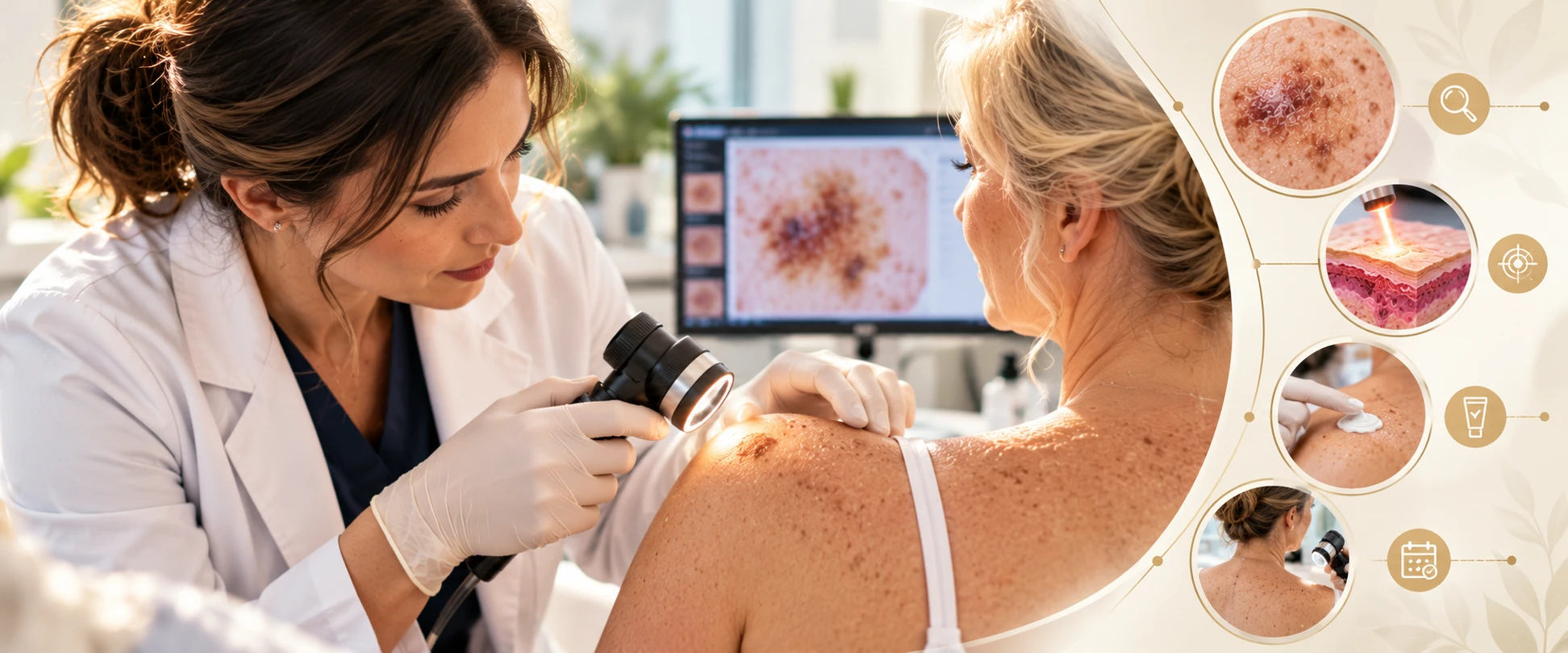
Actinic keratoses, also called solar keratoses, are areas of abnormal skin associated with long-term ultraviolet exposure. Some can progress to squamous cell carcinoma, so a persistent rough or scaly patch should be assessed.

Your visit, explained

A treatment plan,
built around your skin.

Treatment depends on the diagnosis, the number and location of affected areas, your health and what you can manage during recovery.

  1. 01

    Look at the affected areas

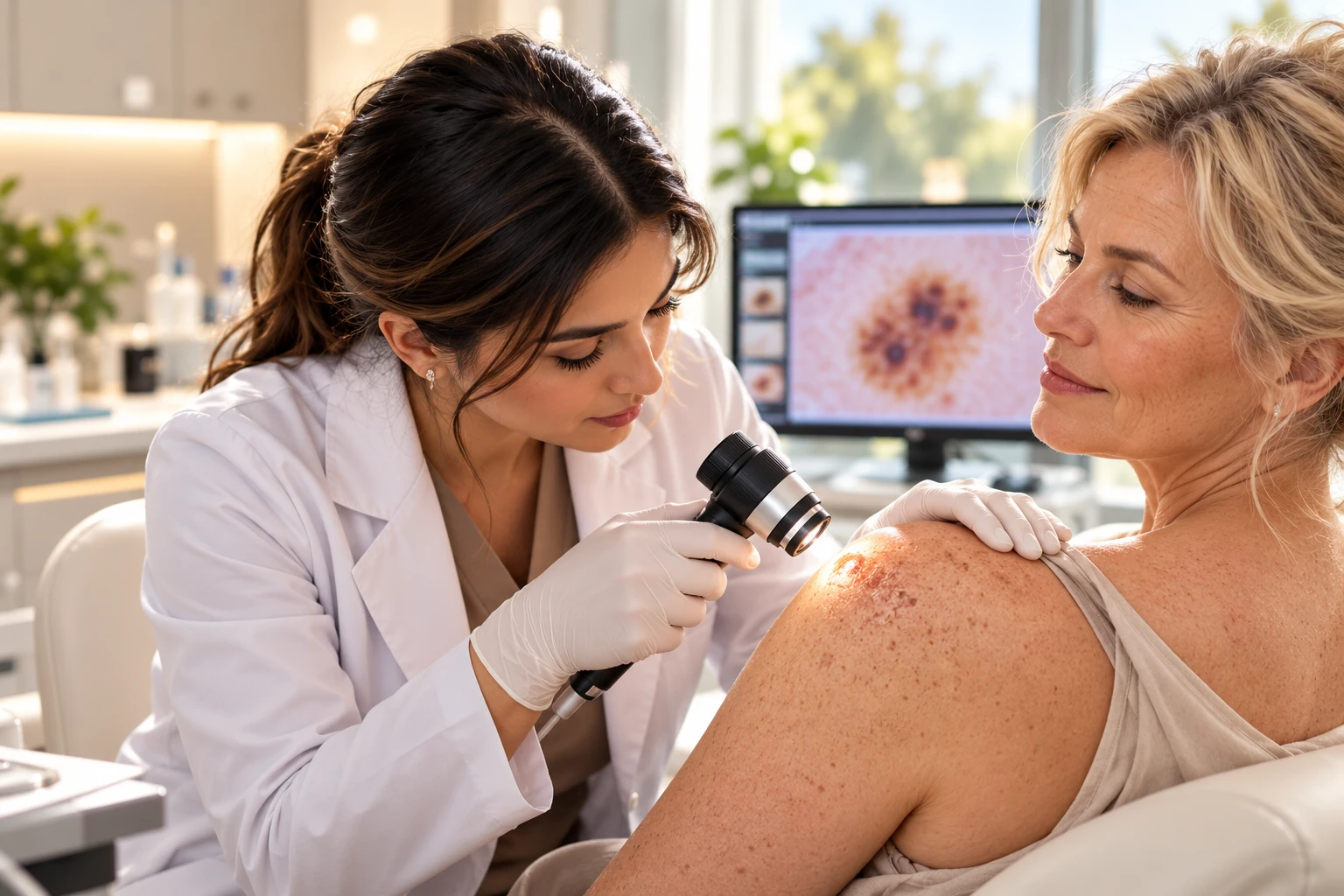
    Discuss symptoms, previous treatments, sun exposure and relevant medical history. Your doctor examines the patches and checks for concerning features.

  2. 02

    Confirm what needs treating

    An examination may be enough to identify an actinic keratosis. A suspicious or uncertain area may need a biopsy before treatment is chosen.

  3. 03

    Compare suitable options

    Cryotherapy may suit individual lesions. Prescription field treatments may be considered for a wider affected area. Ask about benefits, reactions and alternatives.

  4. 04

    Plan recovery and review

    Confirm how to use any prescribed treatment, what skin reactions to expect and when the area should be reassessed.

Before you arrive

A little preparation.
A better conversation.

Discuss what will work for your routine. Some treatments produce a visible skin reaction and need planning around daily activities.

Talk to our team
  • List previous treatments

    Bring the names of creams or procedures you have tried and explain any reactions.

  • Share your medicines and health history

    Tell your doctor about allergies, immune suppression and medicines applied to your skin.

  • Ask about the recovery period

    Discuss work, outdoor activities and any events that may affect the timing of treatment.

  • Confirm the treatment instructions

    Ask what to apply, where to apply it and who to contact if a reaction worries you.

Your next steps

Treatment and sun protection work together.

Follow the instructions given for your particular treatment. Report unexpected or severe reactions, and return for the agreed review. Continue combined sun protection; treating existing patches does not remove the need to protect your skin.

Read the sun-protection guide

Good questions, clear answers

A few things
you might be asking.

For advice about your own symptoms or appointment, speak with our team.

Are actinic keratoses the same as skin cancer?

They are precancerous skin changes rather than a diagnosis of invasive cancer. Some can develop into squamous cell carcinoma. Your doctor can assess which areas need treatment, monitoring or further testing.

What does cryotherapy involve?

Liquid nitrogen is applied to freeze a selected lesion. It may sting or feel uncomfortable, and blistering or crusting can occur afterwards. Ask about the expected reaction and care for your treatment site.

What is field treatment?

It treats a wider area of sun-damaged skin rather than one isolated spot. A prescribed cream may be an option. The choice, application schedule and expected reaction depend on the treatment being used.

Will every patch need a biopsy?

No. Many actinic keratoses can be identified during an examination. A biopsy may be recommended when the diagnosis is unclear or the lesion has features that need closer assessment.

Can I use an old prescription cream on a new patch?

Ask your doctor before restarting a treatment. A new area may have a different diagnosis, and instructions vary with the medicine and the body site. Do not assume an earlier plan applies.

What happens after treatment?

Your doctor may review the response and check any persistent areas. Further treatment can sometimes be needed. Ask how to recognise an unexpected reaction and how to protect the area while it heals.

Treatment options for actinic keratoses

Actinic keratoses are precancerous skin changes associated with ultraviolet exposure. Treatment is chosen after an examination, taking account of the lesions and your health.

Individual lesions or a wider field

Cryotherapy may be suitable for selected individual lesions. Prescription field treatments may be considered when a wider area is affected. The choice depends on the number, location and features of the patches.

Prepare for the reaction and review

Some treatments cause redness, soreness, blistering or crusting. Ask what is expected for your specific treatment, how to care for the area and when the response will be reviewed.

An original summary based on American Academy of Dermatology patient information. General information; your clinician can advise on your individual care.


Understanding rough, sun-damaged patches

An actinic keratosis, also called a solar keratosis, is a scaly area that develops in sun-damaged skin. Some can progress to squamous cell carcinoma.

Appearance alone can be misleading

Patches may be rough, thickened, red, skin-coloured or pigmented. Other skin conditions can look similar, so a persistent area needs an appropriate assessment.

When to raise a concern

Tell your clinician if a lesion becomes tender, thickens, grows, bleeds or fails to heal. An uncertain or suspicious area may need a biopsy rather than treatment based only on its appearance.

An original summary based on DermNet patient information. General information; your clinician can advise on your individual care.

A practical sun-protection routine

Sunscreen is one part of protecting your skin. Use it together with suitable clothing, a broad-brimmed hat, sunglasses and shade.

Choose and apply it properly

Choose broad-spectrum, water-resistant SPF 50+ sunscreen and follow the label. Apply generously before going outdoors, allowing the recommended time before exposure. Remember your ears, neck and backs of hands.

Keep protection going

Reapply as directed, including after swimming, sweating or towelling. Sunscreen does not block all ultraviolet radiation and is not a way to safely extend your time in the sun.

An original summary based on Cancer Council Australia patient information. General information; your clinician can advise on your individual care.

A little more clarity

Patient guide

More Services

    Elmwood Skin · Albury–Wodonga

    Make a plan for sun-damaged skin.

    Talk through the affected areas, your concerns and the options that may suit you.

    7 McFarland Road, Wodonga VIC